
How to prove AI assistant ROI in 30 days
A practical 30-day evaluation model for showing measurable delivery impact from an AI assistant before wider rollout.
Most people do not struggle to start an AI assistant trial. They struggle to prove whether it worked.
Without a clear measurement model, you get strong opinions but weak decisions.
Why ROI conversations stall
Common patterns in failed evaluations:
- Too many use cases in week one.
- No baseline before enablement.
- Success criteria defined after the pilot.
- Feedback collected, but not tied to delivery outcomes.
Pick one workflow first
Start with one workflow where context quality directly affects delivery speed.
Good examples:
- Project handover and kickoff.
- Daily delivery risk review.
- Repeated "where did we decide this?" questions.
Keep the first phase narrow enough to measure, then expand.
Define baseline metrics before rollout
Use a simple baseline for two weeks before enablement:
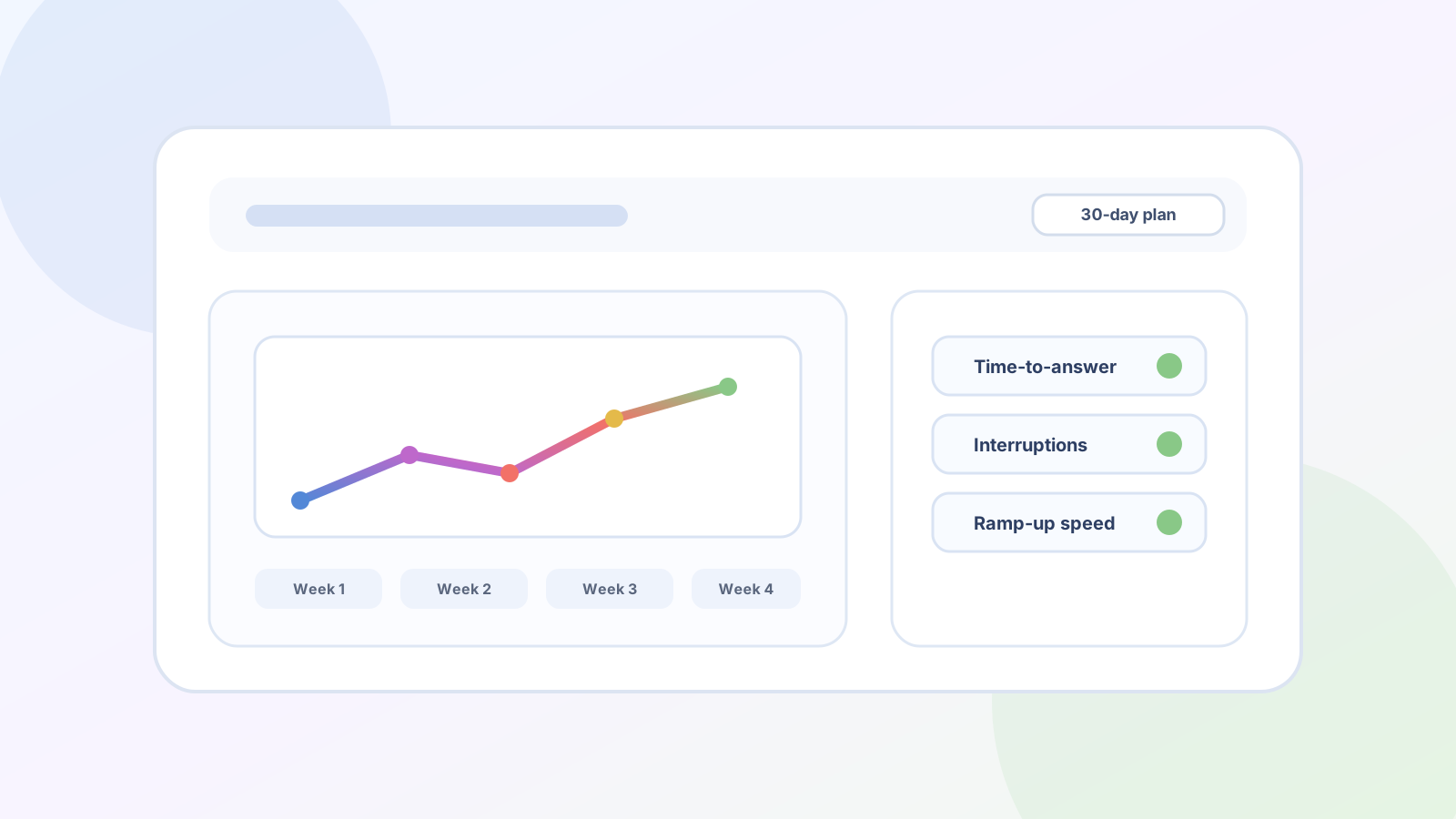
- Time-to-answer for routine project questions.
- Number of avoidable interruptions to senior experts.
- Ramp-up time for new contributors on active work.
- Rework caused by missed context or rediscovery.
You do not need perfect instrumentation. Consistent sampling is enough.
Four-week evaluation model
Week 1: Enable and stabilise
- Configure capture and privacy defaults.
- Train users on review-before-share workflow.
- Confirm one primary use case for the initial cohort.
Week 2: Measure usage quality
- Check daily review completion rate.
- Track whether approved updates are reusable.
- Identify friction points and fix quickly.
Week 3: Compare against baseline
- Measure delta on time-to-answer and interruptions.
- Review examples where prior knowledge avoided rework.
- Validate confidence in delivery decisions.
Week 4: Produce decision pack
- Summarise metric movement.
- Include representative workflow examples.
- Recommend continue, expand, or pause.
Scorecard for decision meetings
Use one page with:
- Target workflow.
- Baseline vs current values.
- Change magnitude.
- Confidence level.
- Key risks and mitigations.
This format helps leadership decide without narrative overload.
What good outcomes look like
Strong pilots usually show:
- Faster context recovery in live work.
- Lower dependency on a small number of experts.
- Better consistency of end-of-day knowledge quality.
The goal is not "AI everywhere." The goal is measurable operational lift.