
Enterprise AI governance checklist before rollout
A practical governance checklist for security, IT, and delivery leaders evaluating local-first AI assistant deployment.
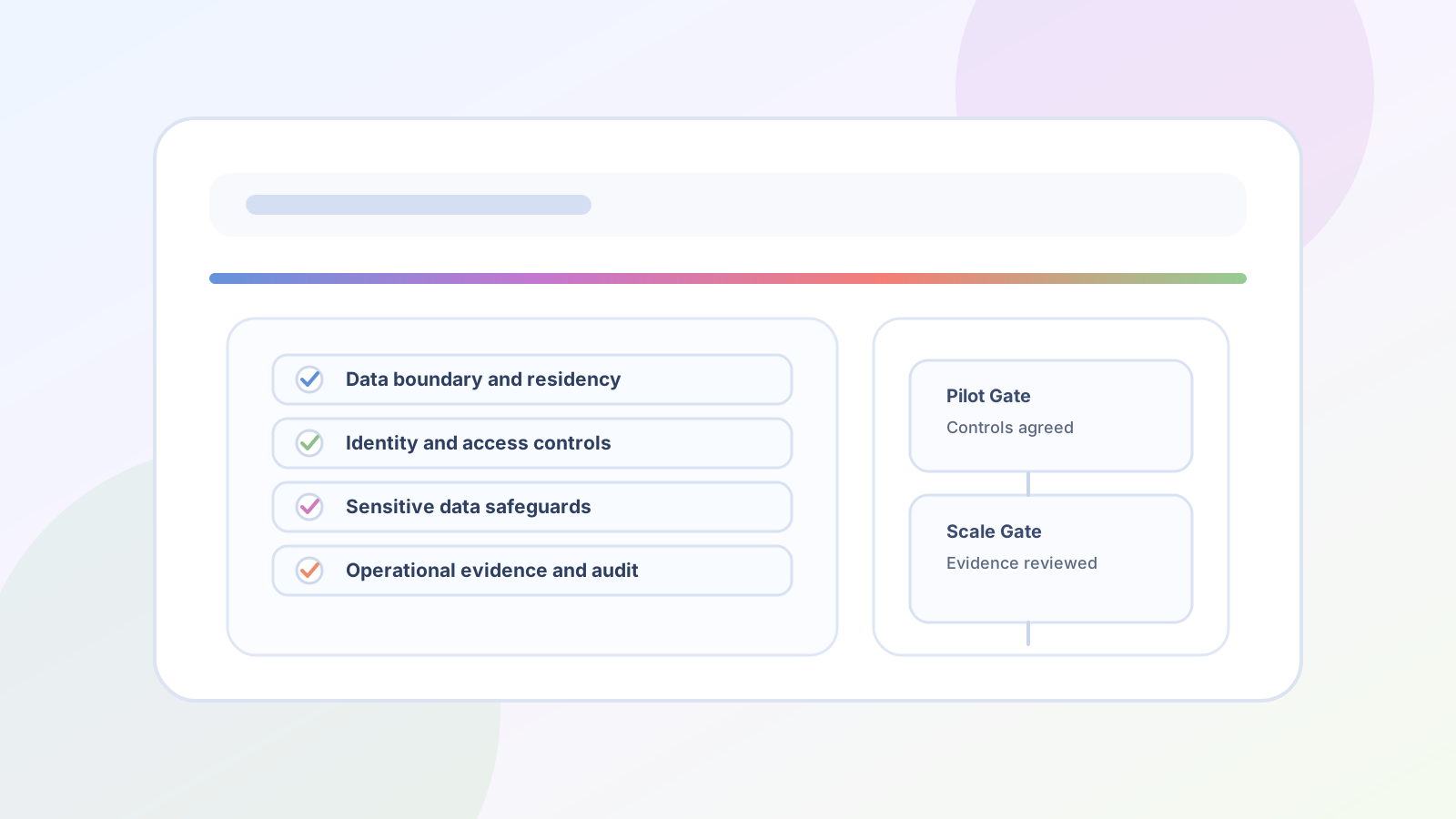
Enterprise AI adoption usually fails for governance reasons, not capability reasons.
Teams often discover control gaps late, after enthusiasm is high and rollout pressure is rising.
This checklist helps you surface constraints early and sequence adoption safely.
1. Data boundary and residency
Confirm:
- What data stays local by default.
- What can be shared, and only after which approval step.
- Which optional integrations change data flow.
- How retention and deletion are handled for endpoint data.
Outcome: clear boundary definition before pilot expansion.
2. Identity, access, and revocation
Confirm:
- Authentication method and SSO requirements.
- Access model for individuals, teams, and admins.
- Device registration and revocation process.
- Session expiry, token lifecycle, and auditability.
Outcome: identity and access controls align with existing policy.
3. Sensitive data controls
Confirm:
- Capture pause behaviour and scope controls.
- Window exclusion rules for high-risk applications.
- PII redaction strategy and severity thresholds.
- Exceptions process for legitimate business use.
Outcome: sensitive workflows can be operated without policy ambiguity.
4. Operational controls and evidence
Confirm:
- Security-relevant event logging.
- Monitoring and health checks.
- Update and patch rollout path.
- Ownership for operational incidents and escalation.
Outcome: the platform can be run as an operational system, not a one-off tool.
5. DPIA and systematic monitoring (UK GDPR Article 35)
Confirm whether continuous capture or systematic workplace monitoring triggers a mandatory Data Protection Impact Assessment before rollout. Persistent audio capture, persistent screen indexing, and organisation-wide deployment are common triggers. Use the ICO's employment-monitoring guidance as the starting point for worker-facing capture.
Outcome: DPIA completed, signed off, and linked to rollout approval where required.
6. Recording consent
Confirm that users understand they must obtain consent before recording other people, and that pause and exclusion controls are part of the operating model. See Recording consent & your legal obligations for the product-facing summary of US all-party-consent states and UK controller duties.
Outcome: consent obligations are explicit in policy, training, and deployment communications.
7. Storage limitation (UK GDPR Article 5(1)(e))
Confirm retention settings match your records-management policy. Avoid indefinite retention of recorded conversations unless you have a documented lawful basis and review process. Pro plans support configurable retention so history does not accumulate without an explicit organisational choice.
Outcome: a named retention period, owner, and review cadence before scale-up.
8. US recording and monitoring law (deferred detail)
Several US states require all-party consent for audio recording; others require employee monitoring notice before electronic surveillance. Treat this as a deployment checkpoint now and expand jurisdiction-specific playbooks when US enterprise sales begin.
9. Commercial and rollout guardrails
Confirm:
- Pilot success criteria and measurable outcomes.
- Decision gates for moving from pilot to scale.
- Support model and accountability on both sides.
- Exit criteria if adoption or controls do not meet threshold.
Outcome: rollout decisions become objective and defensible.
10. Governance anti-patterns to avoid
- Starting with wide rollout before boundary decisions.
- Treating legal and security review as a final sign-off step.
- Relying on generic AI policy instead of product-specific controls.
11. Recommended sequence
- Boundary and controls workshop.
- Focused pilot with documented guardrails.
- Weekly governance review with evidence capture.
- Decision meeting using agreed thresholds.
Governance should accelerate good decisions, not delay them.